Factory Direct | Suitable for Furniture Factories, Panel Mills & Foreign Trade Buyers
- Quick Summary (Choose Directly After Reading)
Simply put: The core of choosing a woodworking carbide tipped circular saw blade lies in 3 key points — panel material, cutting requirements, and equipment parameters. Matching with DiZiK's adaptive saw blades can increase cutting efficiency by 30%, reduce chipping by 90%, and extend tool service life by more than 50%.
- Who This Guide Is For
- Purchasers and workshop operators in furniture factories and panel processing plants
- Woodworking equipment maintenance and care personnel
- Foreign trade buyers (focus on woodworking tool export, compatible with overseas equipment standards)
- New purchasers who want to choose the right saw blade quickly and avoid mistakes
Not for: Scenarios pursuing extremely low prices and ignoring cutting precision and tool life.
- Core Selection Points (Summarized by DiZiK Factory Practice)
Based on DiZiK's years of experience in woodworking tool production, 4 core points help new users choose correctly at one time without repeated trials. All saw blades are made of carbide, suitable for various woodworking scenarios.
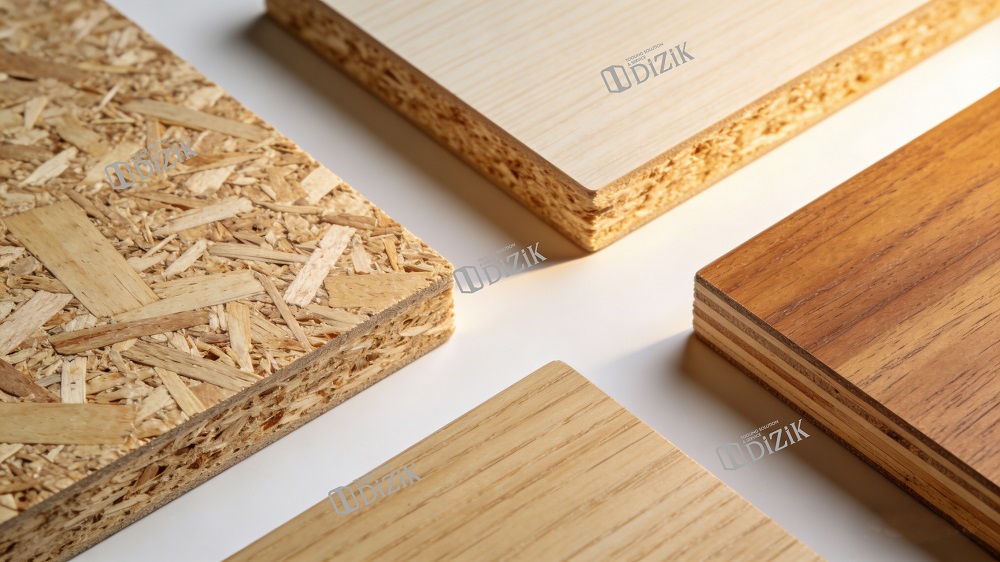
- Panel Material : Different panel materials and densities require different saw blade tooth profiles, which is the key to avoiding chipping and jamming. Below are common woodworking panels and their matching saw blade instructions: Common Woodworking Panels
1. Solid Wood Panels (Characteristics: Clear natural wood grain, hard texture, such as pine, oak, birch): Suitable for alternate top bevel (ATB) saw blades, ensuring smooth cutting without burrs and retaining the integrity of natural wood grain, ideal for furniture frames and solid wood door panels.
2. Man-Made Panels (Characteristics: Flat surface, no obvious wood grain, such as particleboard, MDF, blockboard): Suitable for triple chip grind (TCG) saw blades. These panels have loose texture; TCG teeth can first break the edge and then trim, reducing chipping and dust accumulation, suitable for furniture panels and cabinet boards.
3. Soft Panels (Characteristics: Soft texture, easy to cut, such as acrylic, PVC board, thin wood board): Suitable for flat top grind (FTG) saw blades. FTG teeth ensure stable cutting, avoid heat adhesion, and prevent surface scratches and deformation of panels.
DiZiK provides custom carbide tipped circular saw blades for various panels, which can accurately match tooth profile and tooth count according to customers' specific panel types, eliminating repeated trials.
- Tooth Profile & Tooth Count : Tooth profile determines cutting precision, and tooth count affects cutting efficiency. Different tooth profiles are suitable for different scenarios. Below are common tooth profiles with instructions for new users to refer to directly: 2: Common Saw Blade Tooth Profiles
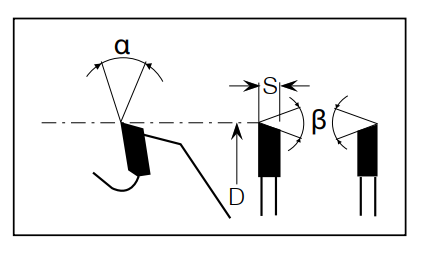 1. Alternate Top Bevel (ATB) (Characteristics: Teeth are arranged alternately left and right with inclined tooth surfaces): Fast cutting speed and smooth chip removal, suitable for solid wood and hardwood, ensuring no obvious burrs after cutting. DiZiK's ATB carbide tipped circular saw blades adopt staggered grinding technology, which can effectively reduce vibration during cutting and improve stability.
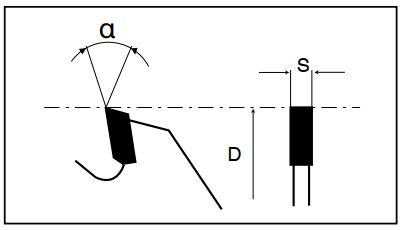
2. Flat Top Grind (FTG) (Characteristics: Flat tooth tips, no inclined angle, uniform tooth spacing): Stable cutting without obvious vibration, suitable for soft panels such as acrylic, PVC and thin wood boards, avoiding heat adhesion and deformation during cutting.
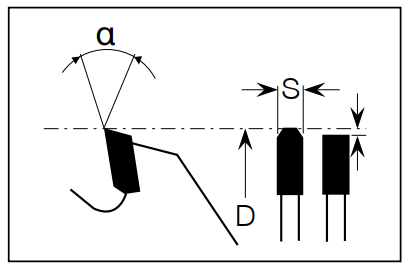
3. Triple Chip Grind (TCG) (Characteristics: Alternating trapezoidal teeth and flat teeth; trapezoidal teeth break the edge, flat teeth trim): High precision, with smooth and flat cutting edges, specially suitable for particleboard, MDF and other panels, minimizing chipping, ideal for finishing scenarios such as furniture panels and decorative panels.
For tooth count: More teeth mean smoother cutting but lower efficiency (suitable for finishing); fewer teeth mean higher efficiency (suitable for roughing). It is recommended to choose according to actual cutting needs (DiZiK's conventional carbide tipped circular saw blades have 12-120 teeth, customizable).
- Saw Blade Material & Craftsmanship: All DiZiK woodworking saw blades are made of high-quality carbide, featuring high hardness, wear resistance and high temperature resistance, which can meet the needs of long-term continuous cutting and adapt to various heavy-duty woodworking scenarios. In terms of craftsmanship, all saw blades undergo vacuum quenching and precision grinding, with sharp edges, rust and wear resistance, suitable for various imported and domestic woodworking equipment, and can be used directly without additional grinding.
- Equipment Parameters: The bore diameter and thickness of the saw blade must fully match the woodworking equipment to avoid saw blade damage or cutting deviation caused by loose installation and vibration. DiZiK's carbide tipped circular saw blades have conventional bore diameters of 25.4mm, 30mm and 32mm, and thicknesses of 1.2-3.0mm, which can be customized according to customers' equipment parameters, suitable for various sliding table saws, panel saws, engraving machines and other woodworking equipment.
- 5 Common Selection Mistakes (Frequently Reported by DiZiK Customers, Must Read to Avoid Pitfalls)
- Mistake 1: Only focusing on price, ignoring material and craftsmanship — Cheap and inferior carbide saw blades seem cost-effective, but they have short service life, are prone to chipping and heating, which increases consumable costs and rework costs. DiZiK's saw blades are made of high-quality carbide, with much higher cost performance than inferior products.
- Mistake 2: Forcing cutting with wrong tooth profile — Using FTG saw blades to cut solid wood, or ATB saw blades to cut MDF, will lead to serious chipping and burrs, and even damage the saw blade and equipment. It is recommended to strictly select the corresponding tooth profile according to the panel type.
- Mistake 3: Ignoring bore diameter matching — If the saw blade bore diameter does not match the equipment spindle, it will loosen after installation, resulting in large vibration during cutting, which not only affects precision but also may cause the saw blade to fall off, posing potential safety hazards. Be sure to confirm the equipment spindle parameters before selection.
- Mistake 4: Pursuing high tooth count and ignoring efficiency — Saw blades with too many teeth have slow cutting speed, suitable for finishing, but using them for roughing will increase equipment load and reduce production efficiency. It is necessary to reasonably select the tooth count according to the processing precision requirements.
- Mistake 5: Ignoring adaptation standards — When purchasing for foreign trade, ignoring the voltage and spindle parameters of overseas equipment will lead to the saw blade being unusable. DiZiK can provide export-oriented carbide tipped circular saw blades that meet CE and ISO certifications, compatible with various overseas woodworking equipment.
- Frequently Asked Questions (FAQs)
- Q: Why can DiZiK saw blades reduce chipping when cutting MDF? A: DiZiK's special saw blades for MDF adopt TCG design, with precision ground and chamfered tooth tips. Combined with high-quality carbide material, they bear uniform force during cutting, effectively reducing edge chipping of panels, suitable for various medium and high-density board processing.
- Q: How long can DiZiK carbide tipped circular saw blades last? A: Under normal use, they can last 3-6 months (adjusted according to cutting volume and panel hardness), and can be re-sharpened 10-20 times, further reducing use costs, far exceeding the industry average service life.
- Q: What causes severe heating of the saw blade? How to solve it? A: Heating is mainly caused by wrong tooth profile, too high rotation speed or blunt saw blade. Solution: Replace with a saw blade with suitable tooth profile (e.g., FTG for soft panels), adjust the equipment rotation speed to the appropriate range, and re-sharpen the blunt saw blade in time; DiZiK's saw blades adopt heat dissipation groove design, which can effectively reduce the temperature during cutting.
- Q: Does DiZiK support custom saw blades? Such as special bore diameter, tooth count and material? A: Yes! DiZiK can customize carbide tipped circular saw blades with different bore diameters, tooth counts and tooth profiles according to customer needs, suitable for various special woodworking equipment. It also supports export customization, providing CE and ISO certifications to meet foreign trade procurement needs.
- Q: What is the delivery time for purchasing DiZiK saw blades? Do you support foreign trade export packaging? A: For conventional specifications, the delivery time is 3-7 days; for customized specifications, it is 7-15 days. We support foreign trade export packaging (both neutral packaging and brand packaging), and can cooperate with customers to complete customs declaration, logistics and other matters, exporting to many countries and regions.
- Q: What should I do if the saw blade becomes blunt after using for a period of time? A: DiZiK provides professional re-sharpening services. After re-sharpening, the original sharpness can be restored, extending the service life; we can also provide saw blade re-sharpening tutorials, allowing customers to re-sharpen simply by themselves (special sharpening tools are required).
- Final Summary & Contact
- Fastest Selection Plan: Choose the tooth profile according to the panel material (solid wood → ATB, MDF → TCG, soft board → FTG), then match the equipment bore diameter, and directly select the corresponding specification of DiZiK carbide tipped circular saw blade without complex calculation.
Most Stable Plan: Contact DiZiK customer service, provide panel type, equipment parameters and cutting needs, and we will accurately recommend the suitable saw blade for you to avoid mistakes.
2026 Key Reminder: With the improvement of woodworking processing precision requirements, high-quality carbide tipped circular saw blades have become the mainstream. Choosing saw blades produced by regular factories (such as DiZiK) can not only improve efficiency but also reduce long-term consumable costs.
DiZiK (www.diziktool.com) focuses on the production and export of woodworking tools, mainly engaging in various woodworking carbide tipped circular saw blades, milling cutters and other products. We provide factory direct supply with quality assurance, supporting customization and foreign trade export. For selection, quotation or sample testing, please contact our website customer service.

 1. Alternate Top Bevel (ATB) (Characteristics: Teeth are arranged alternately left and right with inclined tooth surfaces): Fast cutting speed and smooth chip removal, suitable for solid wood and hardwood, ensuring no obvious burrs after cutting. DiZiK's ATB carbide tipped circular saw blades adopt staggered grinding technology, which can effectively reduce vibration during cutting and improve stability.


